In Missouri’s Hickory Canyons Natural Area, abundant spring rain sends a seasonal waterfall across sandstone formed from the sands of an ancient sea. The deeply shaded canyon remains cooler and wetter than the surrounding uplands, creating habitat for an exceptional variety of ferns, mosses and other plants, including glacial relict species that have persisted from colder periods in the region’s past. Here, falling water crosses a landscape shaped over immense spans of time while supporting the distinctive plant life that still thrives within it.
In Missouri’s Hickory Canyons Natural Area, abundant spring rain sends a seasonal waterfall across sandstone formed from the sands of an ancient sea. The deeply shaded canyon remains cooler and wetter than the surrounding uplands, creating habitat for an exceptional variety of ferns, mosses and other plants, including glacial relict species that have persisted from colder periods in the region’s past. Here, falling water crosses a landscape shaped over immense spans of time while supporting the distinctive plant life that still thrives within it.

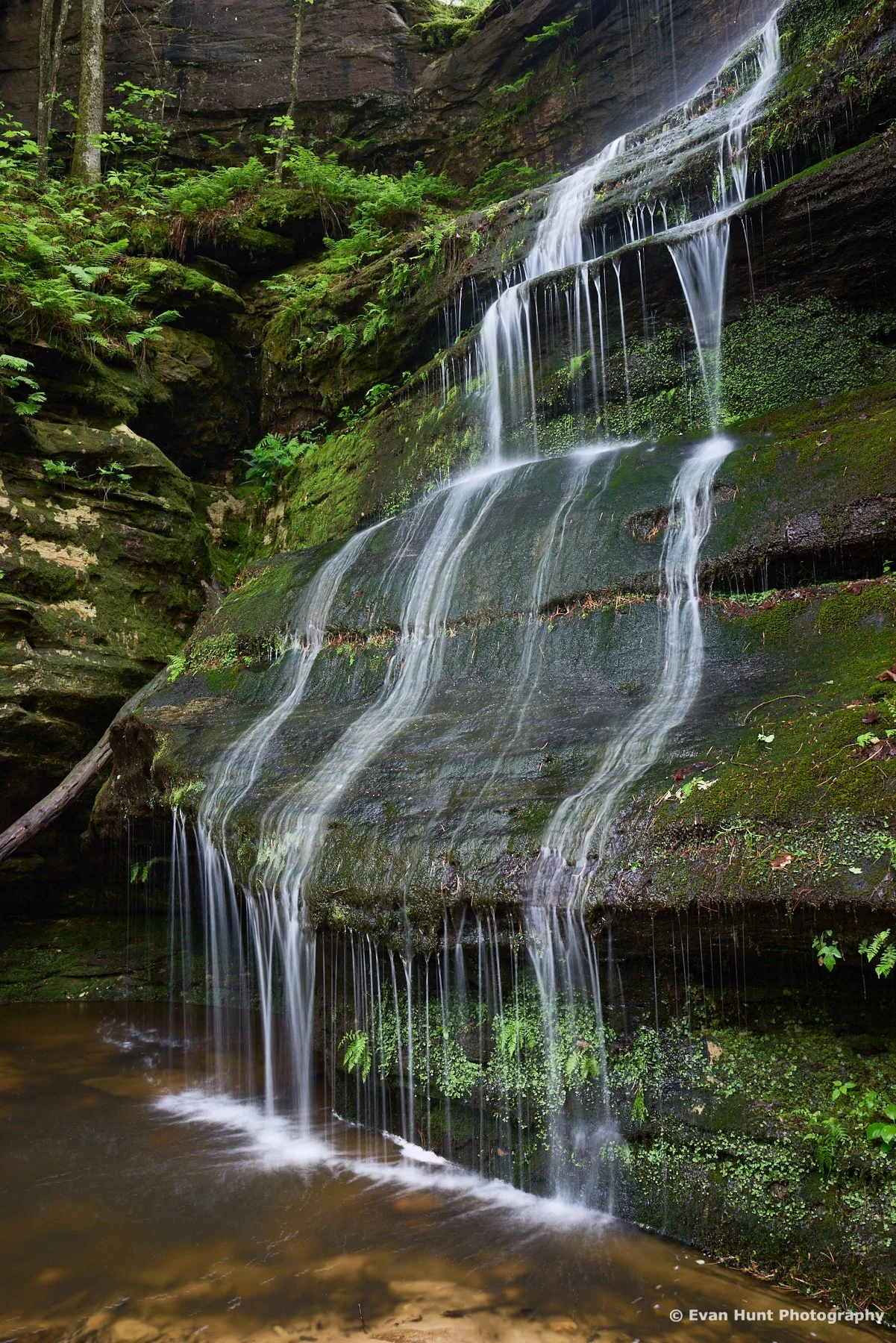 Image 1 of 1