Built for the harsh winters of Yellowstone, bison are remarkably well adapted to cold, snow, and wind. Their dense winter coats provide such effective insulation that snow can remain on their backs without melting. Powerful muscles in the neck and shoulders allow them to sweep snow aside with their heads to uncover grasses buried below. During severe winter storms, bison may turn into the wind, lower their heads, and wait for the weather to pass. These two stood together as snow swept across the Yellowstone landscape in a winter that is demanding, but one they are uniquely equipped to endure.
Built for the harsh winters of Yellowstone, bison are remarkably well adapted to cold, snow, and wind. Their dense winter coats provide such effective insulation that snow can remain on their backs without melting. Powerful muscles in the neck and shoulders allow them to sweep snow aside with their heads to uncover grasses buried below. During severe winter storms, bison may turn into the wind, lower their heads, and wait for the weather to pass. These two stood together as snow swept across the Yellowstone landscape in a winter that is demanding, but one they are uniquely equipped to endure.

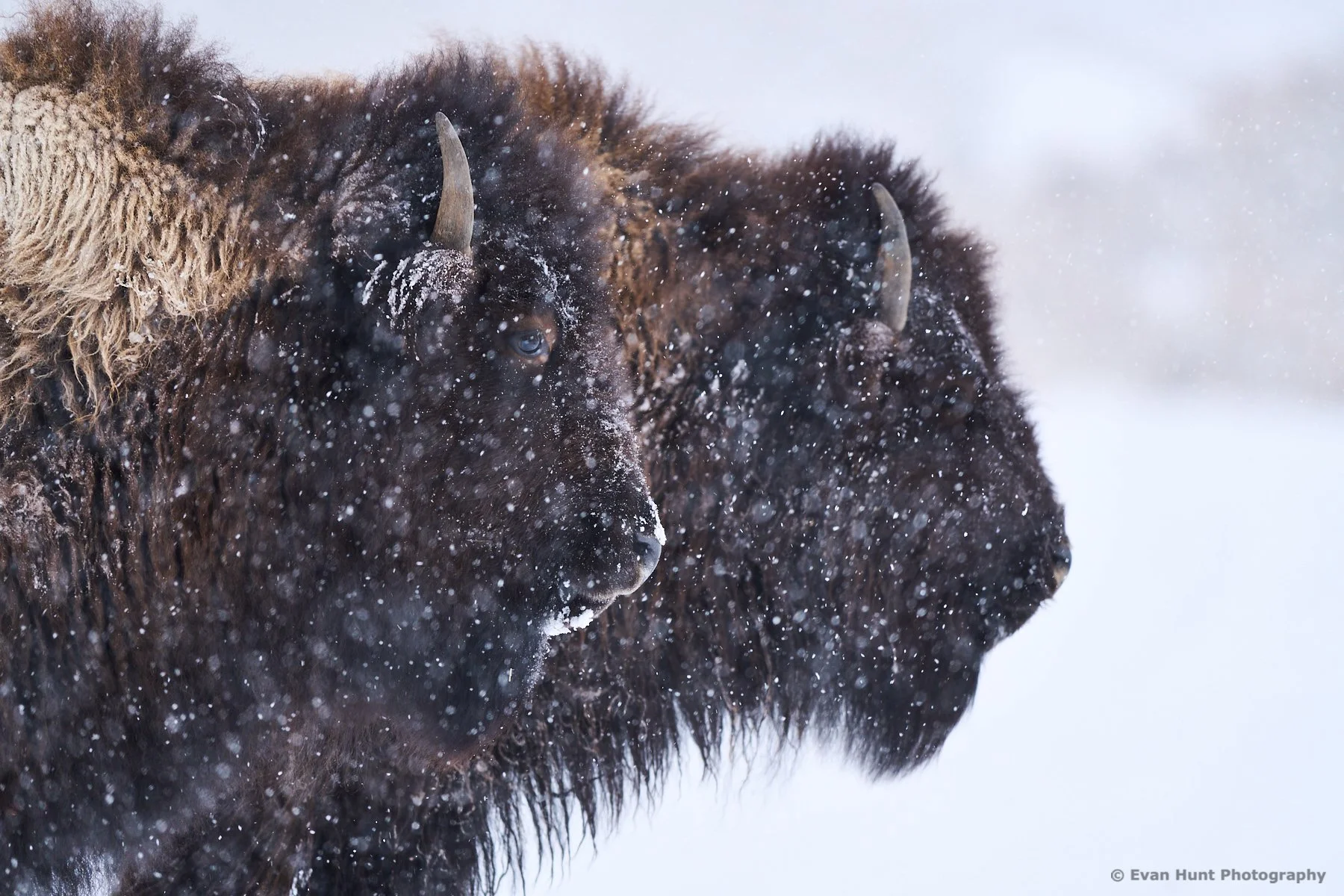 Image 1 of 1